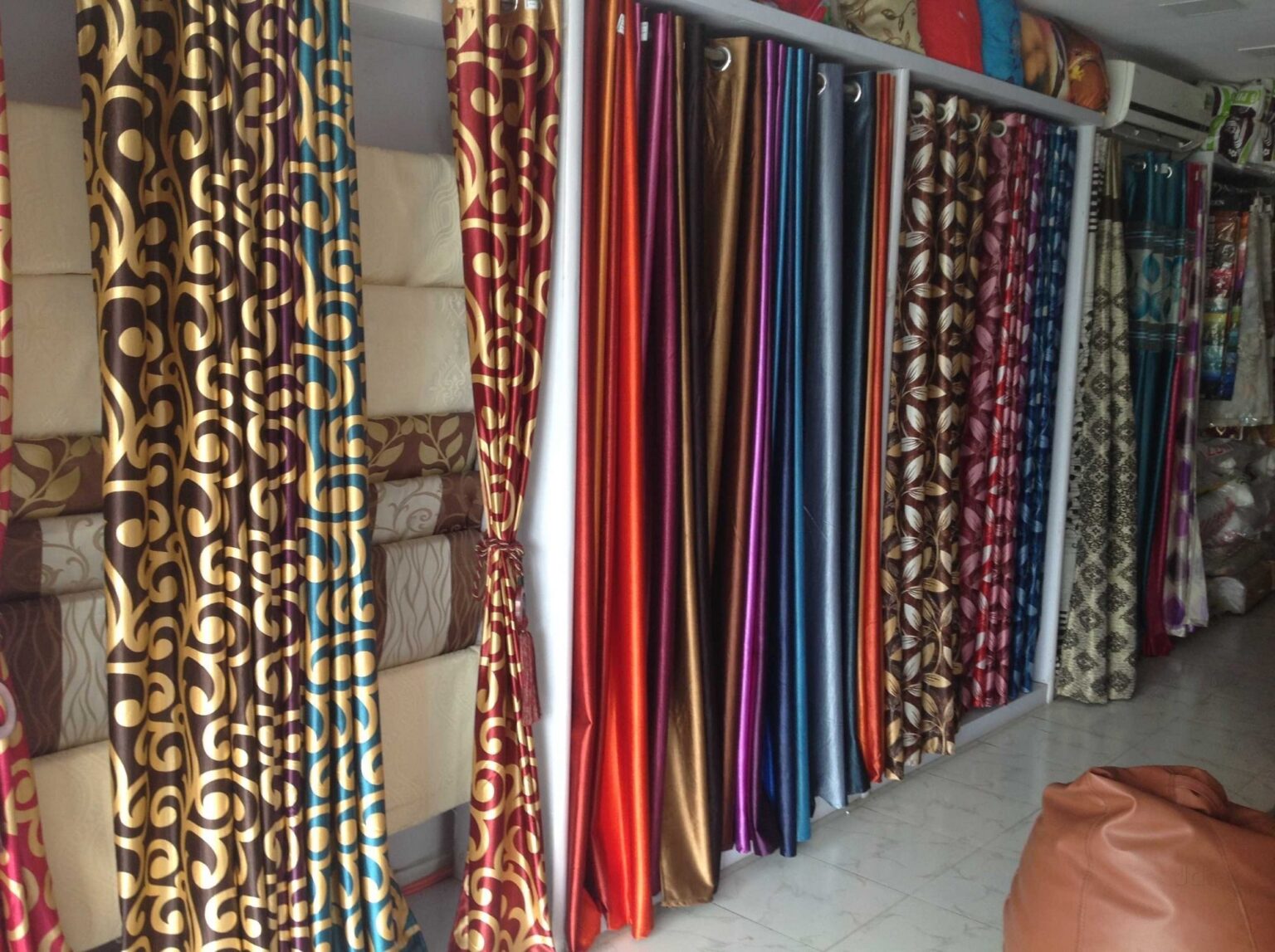
20 Great Reasons for Choosing Curtain Fabric in Lichfield, Birmingham and Walsall
Wiki Article
There Are Numerous Fabric Stores To Explore In Lichfield Including Dresses To Drapery.
The reputation of Lichfield's fabric shops is often overlooked. This can be due to the huge markets in Birmingham or the utilitarian products of Walsall. Lichfield's fabric shops are specialised and frequently surprising, with a the emphasis on discovering rather than bulk supply. The boundaries between dress fabric, drapery and home decor are obscured within the Aladdin caves. They offer unique possibilities for the discerning dressmaker, homeowner, or interior lover. This guide goes beyond the obvious categories of clothing, and highlights the top 10 reasons why Lichfield's fabric market is worth a visit.
Here are the Top 10 Things You Need to Know.
1. Designer dresses can be turned into striking curtains with the "End-of-Bolt Alchemy".
The smaller boutiques in Lichfield often acquire limited runs of high-end designer dress fabrics - silks, fine wools and stunning jacquards. If only 3-5 meters remain on the bolt, it's economically unprofitable for designers but perfect to use as a singular, beautiful window covering. You can find a heavyweight silk dupion, typically for bridal wear, with the body and sheen to make stunning, brilliant curtains for bay windows. These stores actively promote these fabrics for soft furnishings, offering a unique, gallery-like fabric that you won't find in a standard curtain collection.
2. The Haberdashery as Curtain Studio The Haberdashery as a Curtain Studio: Trimmings for the ordinary.
Lichfield's secret weapon lies in its outstanding merchandise. Their strength is not selling dress fabric per metre but rather trimmings. A plain linen curtain that you purchase from the Birmingham market can be made into a custom-made curtain. They carry exquisite antique-style braids as well deep fringes or ornate and tasselled the tassels. They also carry special curtain tapes that are designed specifically to be made by hand for headings. They have an eye for detail similar to a dressmaker in couture. They can give suggestions regarding how a silk cord or a contrasting piping cord (a technique that is used in couture) could be a custom look to simple drapery.
3. The Vintage & Linen Expert Fabrics with a Story.
Lichfield's hidden experts offer antique textiles, deadstocks, and European house linens. You will find fabrics with a lot of personality and historical significance in this. A patinated French bed sheet can be transformed into curtains for a more relaxed Provencal appearance. The shops that specialize in this know the narrative significance of fabric. They can provide advice on delicate restoration, gentle washing, and also how to eliminate historical flaws.
4. The dressmaker's eye for Drape.
Shop assistants working in Lichfield boutiques might be dressmakers, or possess a formal training. They are more able to grasp how fabrics move, as well as their "hand" as well as its "drape," than general furniture salespeople. If you're asking for curtains that have an easy and fluid fold, as opposed to a stiff and formal fold, they'll point you to suitable wools heavy rayons, double knits, which are usually found in their dress fabrics section. They'll also discuss how you can make use of the bias of your fabric (diagonal grain), a technique that originates from haute-couture to create a unique falling effect.
5. The "Sample Library' Model Low-Pressure Exploration High-End Options.
Contrary to the overwhelming bolt-by-bolt experience that warehouses can offer however, a number of Lichfield stores operate on a curated library system. You peruse neatly-organized catalogs of large swatches of international mills, typically with upholstery weight and heavier dresses. You order a length of fabric that is cut to your desired size by the mill, and it is delivered within a few days. This option lets you pick from a greater selection of fabrics and superior quality than that which is sold in a store.
6. The Bridge Between Birmingham's Bulk and Walsall's Practicality.
Lichfield is an important middle ground. Birmingham has a greater selection, but Walsall has more targeted and high-quality options. It's the perfect "second-stop" on an exploration of fabric. It is possible to source your main upholstery fabric from a Birmingham trade counter, your lining and basic cottons from the Walsall value store, but journey to Lichfield for the ideal trimming, defining trim, unique lining fabric (like an old-fashioned floral to make curtains reverse) or the perfect thread to make up. This is a distinctive addition to your project.
7. Bespoke Service For "Unmakeable Windows"
They are able to tackle niche problems due to their size and emphasis on service. They are the ones you should go to for windows that aren't able to conform to standard designs. A window with arches may require a perfectly shaped pelmet. A small casement in an attic could require a tiny, fully lined curtain. They are used to working at this degree of complexity that they are almost on the level of sartorial, treat every window as if it were the equivalent of a dress.
8. The Focus on Natural Fibres and weavings made from artisan.
Lichfield’s independents promote natural fibers. Chain stores however are mostly filled with polyester. This is crucial to ensure the environment's quality. There are a variety of options that include pure linens due to their hygroscopic properties, which make them ideal in bedrooms, Belgian Cottons, English Wools, and Raw Silks. They develop a delicate patina, and become more soft with time. For curtains, it means the fabric is alive and breathes. It responds to light and air in various ways every day.
9. How to maintain cleaning, maintain, and age fabric.
A fine fabric sold by the metre is accompanied by a maintenance guide. The staff will explain in detail how natural dyes can alter with the sun (viewed not as fade but rather patina) and how to steam iron linen curtains, or the reasons the reasons why certain wools shouldn't be dry-cleansing. This long-term approach makes a purchase into a commitment to stewardship. They often have relationships with specialized dry-cleaners as well as restoration services, creating a support network for your fabric's entire lifespan.
10. The Creative Catalyst. How These Shops Redefine the concept of Possibility.
The end result of exploring the Lichfield's unique fabric shops is an act of creativity. It pushes people to think beyond the conventional curtain fabric section. It suggests the use of a thick tweed to create a coat as means of covering the seat. It demonstrates how the border on an sari makes a wonderful curtain for a blind. It connects the art of making dresses -- the precise and the finishing, the love of grain and texture -it is also a part of home interiors. You don't just leave with a carrier bag of cloth; you leave with a new understanding of what textiles in your home can be, fuelled by the curated and cross-disciplinary culture that is the hallmark of Lichfield's top textile destinations. Read the recommended fabric shops in Lichfield for more examples including window blinds, curtains with blinds, hole in the wall curtains ltd, fabric blinds, curtain fabric shop near me, window blinds curtains, curtain fabric, curtain tracks, curtain poles and curtains, the range curtains and more.

Calculating The Materials You'll Need For Diy Curtains & Upholstery
There are times that creative ventures fail to make the transition from admiring a fabric metre after millimetre, to making sure they purchase the quantity required for DIY projects. A lot of creative projects fail due to the twin terrors of shortage and wasted materials. They either over-order or end the project in mid-program, resulting in costly costs. This guide explains how to make curtains and upholstery by stepping beyond the traditional length-and-width formulas, to include obscure variables like the fabric's pile and pattern. It is crucial to link these maths to the reality of purchasing fabric from various types shops in the West Midlands. This acknowledges that the place you purchase directly affects how you calculate. If you can learn these fundamentals, you'll go from being a nervous browser into an expert, confident buyer who is ready to enter with boutiques, markets or even trade counters.
The Top 10 Things You Should Be Educated About:
1. The "Fullness Factor" The Fallacy: Why You're Likely Doubling (Not matching) The Width of Your Rail.
The most frequent DIY mistake is to purchase fabrics that don't match the exact measurements of your curtain pole or track. This creates flat, meagre curtains. Professional made to measure curtains employ an "fullness factor" that is 2 to 2.5 times the width of the rail. This excess is pleated to create luxurious lightweight blocking folds. The first equation to consider is: **Rail Width x 2.5 = the total width of fabric required. **For a 200cm-long rail, you'll need 500cm (five metres) of fabric width *before* factoring in pattern repeats. If you want to appear professional, this is a must-know before you enter any fabric store.
2. The Pattern Repeat tax is the hidden multiplier which determines your measurement.
After selecting a fabric with a pattern, you will need to shift from simple math to strategic planning. The pattern repeat needs to be multiplied by multiples. The measurement can be visible on the tag or is determined by measuring between two distinct points of the design. The formula is: **[(Finished Length + Hem & Heading Allowance) (or Pattern Repeat) = Repeats Required. ** Round this number up*, then multiply by the Pattern Repeat to get the **Cut Length Per Drop**. That means an 250cm pattern with a 64cm repeat will require 3.9 repetitions. Rounding to 4 is the result. This "waste" is essential to ensure alignment of patterns.
3. Buy wide fabric by length not width.
When you are working on big projects like a headboard or sofa, the traditional cutting method (where pattern runs down fabric length) results in unproductive seams. Railroading is the solution: use your fabric width to determine the length of your project. If the fabric's width is 137cm and your sofa 220cm then you will connect two lengths. The pattern might allow it (ask at the counter! If the length of the fabric on the bolt is enough then you can cut only two lengths of 220cm. This requires a longer bolt and results in a seamless piece. Birmingham's trade counters are adept in this process; Walsall's stores may require to be taught the concept in detail.
4. The Dressmaker's Way to Make Curtains: Why You Should Respect the Fabric's "Grain."
As in dressmaking, cutting curtains "on the grains" is crucial. If you're looking for a straight drape, make sure that the threads running parallel to selvedge are completely vertical. When making calculations for curtains that are extra-long, be aware that some decorative fabrics come with a "nap" or the pattern is directional (like velvet or a stylised flower). The waste caused by cutting each drop in the same way is increasing. In Lichfield's dress-fabric-centric shops telling you to "cut with the straight grain for drapery" will instantly match you up with their expertise since they understand grainline integrity more than most general furnishing retailers.
5. The Lichfield Loophole.
When you purchase dresses (e.g. an extremely heavy linen or brocade) from a Lichfield shop for curtains There is a limitation on width. The typical dress fabric is 110cm-150cm wide, while normal curtain fabrics measure between 137cm and 150cm. In order to achieve your required **Total Fabric Width** (from point 1), you'll need to join more panels, which affects the seam allowance as well as pattern matching. The calculation follows *Total Material Width needed / Bolt width of fabric = Number of Panels. ** Round up. Multiply this number by the *Cut Length* to calculate your final number of metres. It can cause more metres to be required than with a larger fabric.
6. The "Upholstery Fabric By the Metre" puzzle The accounting for Cushion Buttoning and Boxing.
Calculating a flat cushion or back in upholstery is easy: width + sew allowance divided by length and seam allowance. Boxing (the sides of a pillow) as well as deep buttons are more complex. To measure boxing, take the circumference of your cushion and add seam allowance. This will be the length of your boxing strip. If you're making deep buttoned backings, double the flat area will allow for the fabric to be pulled into the tufts. Certain stores in Birmingham that specialize in upholstery fabric have "yield guidelines" or consultants that can determine these calculations for you in accordance with the style of furniture you want to purchase.
7. Walsall's Value Engine: Sourcing the linings and mock-ups for calico first.
Before cutting into your costly fabric, you should create an "toile" (or mock-up) made of calico that is cheap. The local fabric stores in Walsall sell this crucial but inexpensive material by the millimetre. Calculate the calico you want and buy it with the same formulas that you used to create the final piece. This will allow you to verify your fullness calculations as well as improve your sewing skills without risk. Walsall can also be used to calculate and source interlining and lining for cost efficiency. This is due to the fact that it's a separate layer that can be used as an analysis layer.
8. The Shrinkage & Selvedge Allowance: The Unseen Centimetres That Matter.
The "invisible" allowance should be added. Add 2cm for every join. (So 4cm if you're side-seaming every panel). For curtain hems, a deep 15cm bottom hem, and 10cm of top heading allowance are the norm. Include a 5-8 percent allowance for shrinkage on natural fibers (linen and cotton) except if the fabric is pre-washed. This can be a dangerous process with wide fragile fabrics. It means you would add 12.5cm for an length of 250cm. When you request a shop to supply fabric cut per millimetre is giving them the length that is finished.
9. The Birmingham Bulk Buy Buffer - The Strategic "Safety Metre."
If you are buying in Birmingham's trade rolls or markets It is challenging to order the same batch of dyes. So, a safety metre rule should be implemented. When you've completed your final calculations, add one complete repeat length of the pattern (or half a metre in the case of plains). This will protect you from threading errors cut errors, future repairs. The marginal cost can be considered an affordable insurance policy against disaster. This cushion may not be as critical in Lichfield. The boutique in Lichfield might be able order simple fabrics, or a particular fabric from Walsall.
10. The Final Pre-Cut Verification: The "Lay-Out" Ritual on the floor or paper.
Perform a final check prior to having the fabric cut in the shop or sheared. Tape the bolt's width onto graph paper, or even your floor. Then, you can lay out each section using a ruler, keeping in mind the repeated patterns and the nap direction. This "paper doll" exercise often reveals one last optimisation--perhaps re-ordering drops can save half a repeat. The last, contemplative stage is what differentiates an anxious DIYer from a confident creator. It makes sure that every inch of Birmingham's hustle or Walsall's practicality serves an end in sight.